
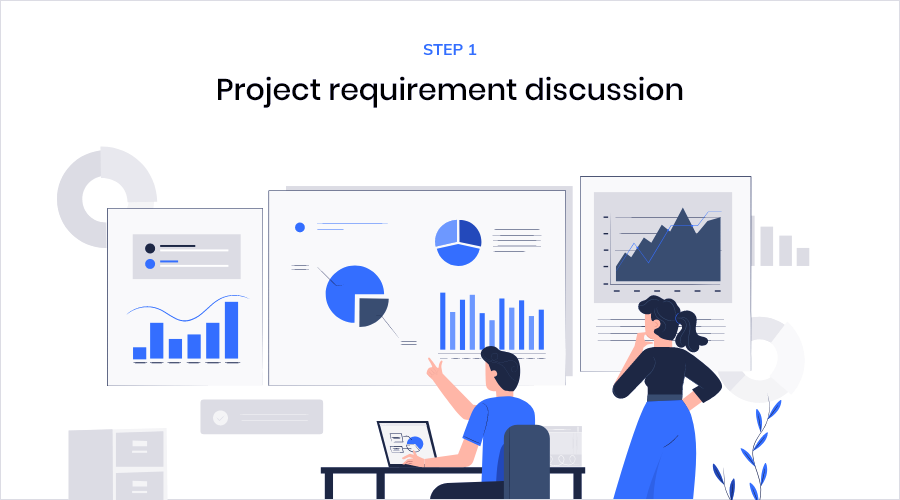
Step 1: Initial discussion
It all starts with a typical Skype meeting, casual, short, just to identify if we can assist you if we can take this project forward.
What do we from our clients?
Starting with the most basic details, like, what kind of application, target audience, market competetors, your budget, expected timelines, etc. Our aim is to check the feasibility of your idea and suggest the best technical go ahead. The more we know about your idea, the better we can deliver.
Then, we prepare a rough estimate for the client & get to know if the client is comfortable with everything and ready to proceed to the next step.
Step 2: Business Insight & Estimation
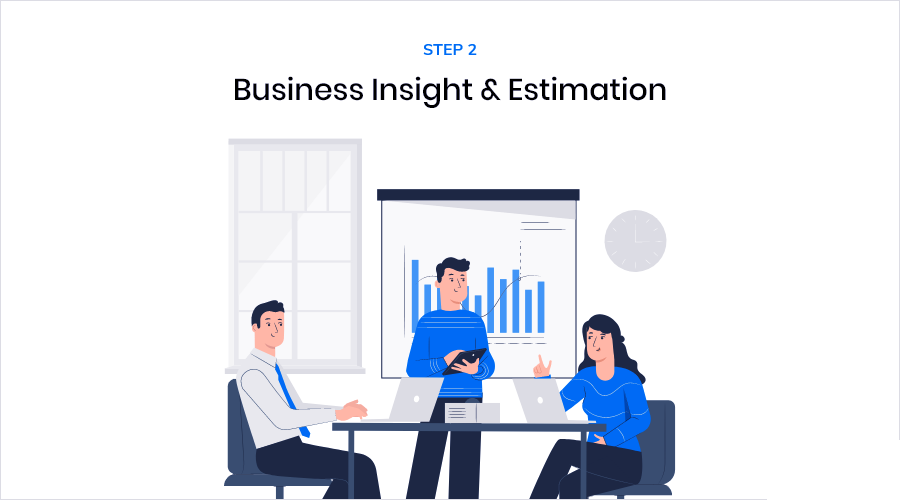
After the inidial consultation, we have internal discussions round, where we the team members provide suggestions & best practices for the app project. Our process in the meeting starts with a QA involvement and test case availability. The early involvement enables QA to understand customer requirements better. Application flow-related queries get resolved in the very initial phase.
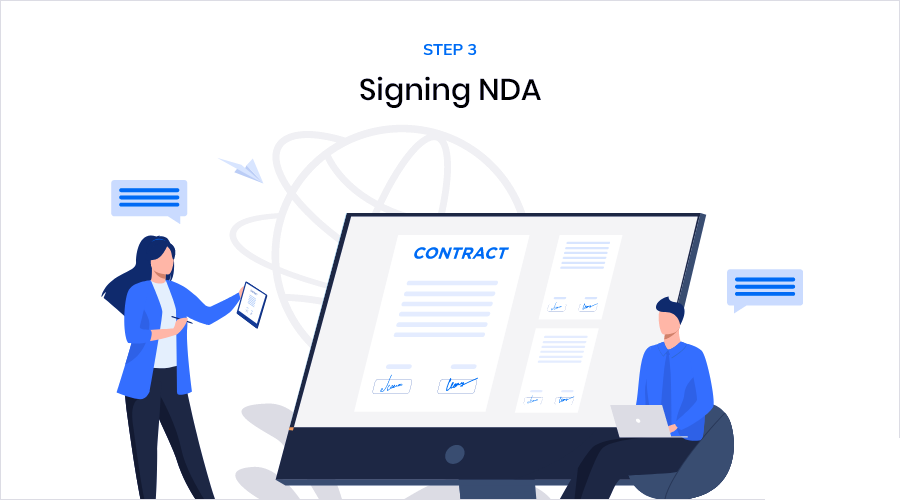
Step 3: Signing NDA
Signing the NDA or Secrecy Agreement in EU ensures that your idea is safe. In fact, it also prevents misunderstandings or miscommunication.
Step 4: Wireframing
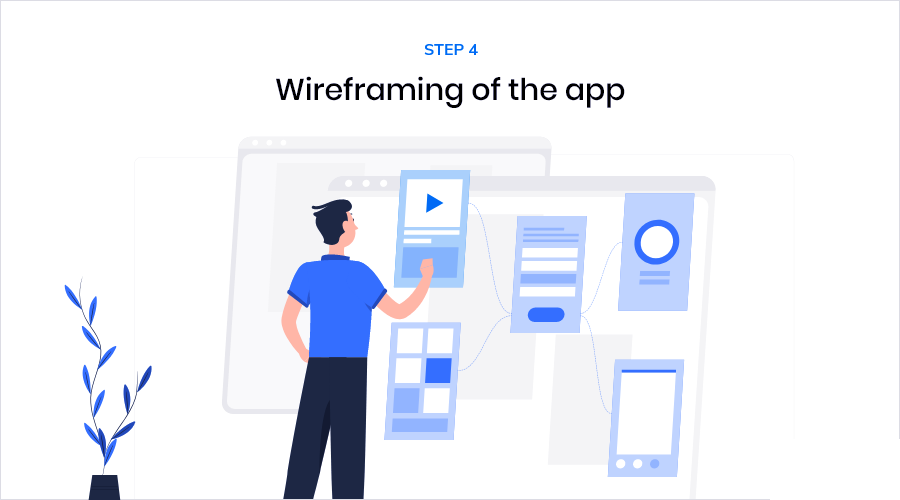
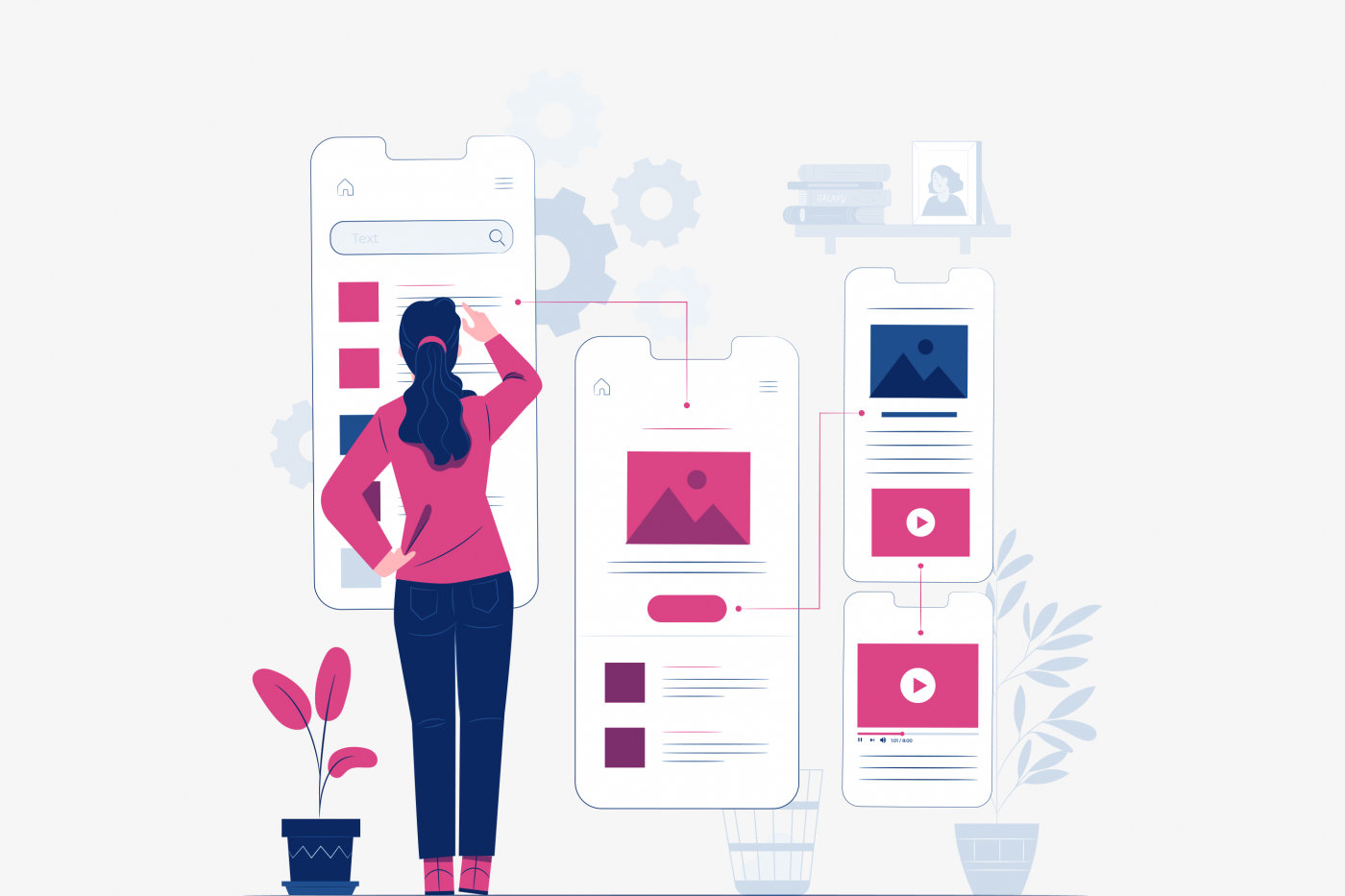
The designing part is the most intricate mobile app development process step, so its best to start with wireframing as it helps to understand the entire flow of the app & its ecosystem and gives a rough idea of how the final product would function.
Step 5: UI/UX design
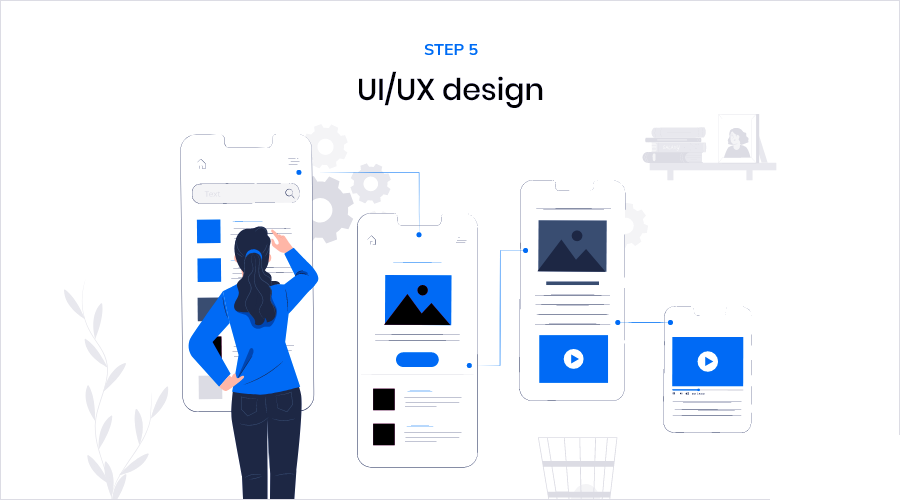
Based on the data collected from our client, their preferences & the approvals on wireframing, we start working on the design on the app. So basically in this step we prepare an up-front design of your complete app without writing a single line of code.
Step 6: Development
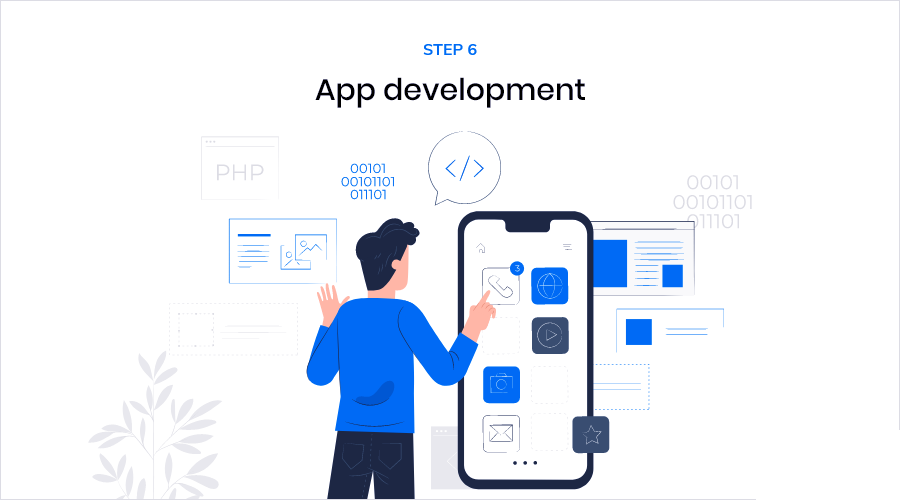
So, after the final approval of the design from the previous step, we make a systematic app development flow and start the development process to make it a user-centric product. Development have multiple stages and parts starting from static development which is a non-functional dataless working model and than dynamic development which is a fully functional working model connected to the cloud servers and the apps hybrid counterparts, for instance website.
Step 7: Beta testing & quality assurance
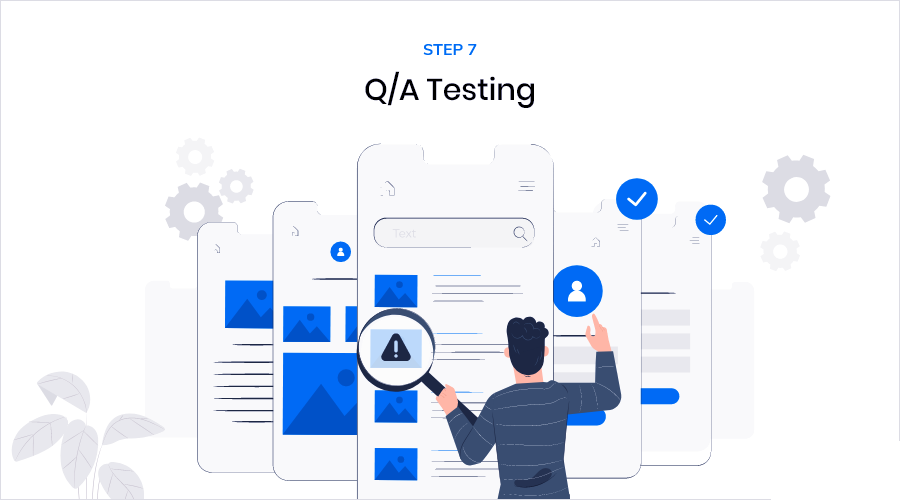
After the development is over it should be made sure that the app works flawlessly & get checked for bugs which maybe found during this process. There are functional and non-functional tests included in the process of mobile app development.
- Functional test: Through this type, the app is tested against the functional requirements/specifications, it includes for example testing the user interface.
- Non-functional test: These tests include tests such as response time, security, scalability, usability, performance. It covers all the tests that are not covered in functional testing.
Step 8: Launching
The step for which I’m sure everyone’s so excited, and we carry on the deployment to the app stores in this step.
An app’s release in the app store includes:
- Your app’s title
- Description
- Category
- Keywords
- Launch icon
- App Store screenshots
Step 9: Post-production support
Every app will need new features and technological updates, thus this is the last & ongoing step. Typically, as soon as the first version of the app is released, the development cycle begins anew, the initial 15 days period is generally covered in the project costs after that an ongoing cost applies, approximately $35-$75 USD per hour.
Conclusion
We hope that sharing this information about our app development process will give you a better idea while selecting SaaS company for your project.
If you liked this article & are in need for a mobile app, you might want to consider us for your project.
